Concrete & Gunite
Concrete & Gunite Pool Removal in Bakersfield, CA
The heaviest pool-demolition scope. Gunite, shotcrete, and poured-concrete shells take more breaking, rebar cutting, haul-off capacity, and site access than lighter pools.
What makes concrete and gunite different
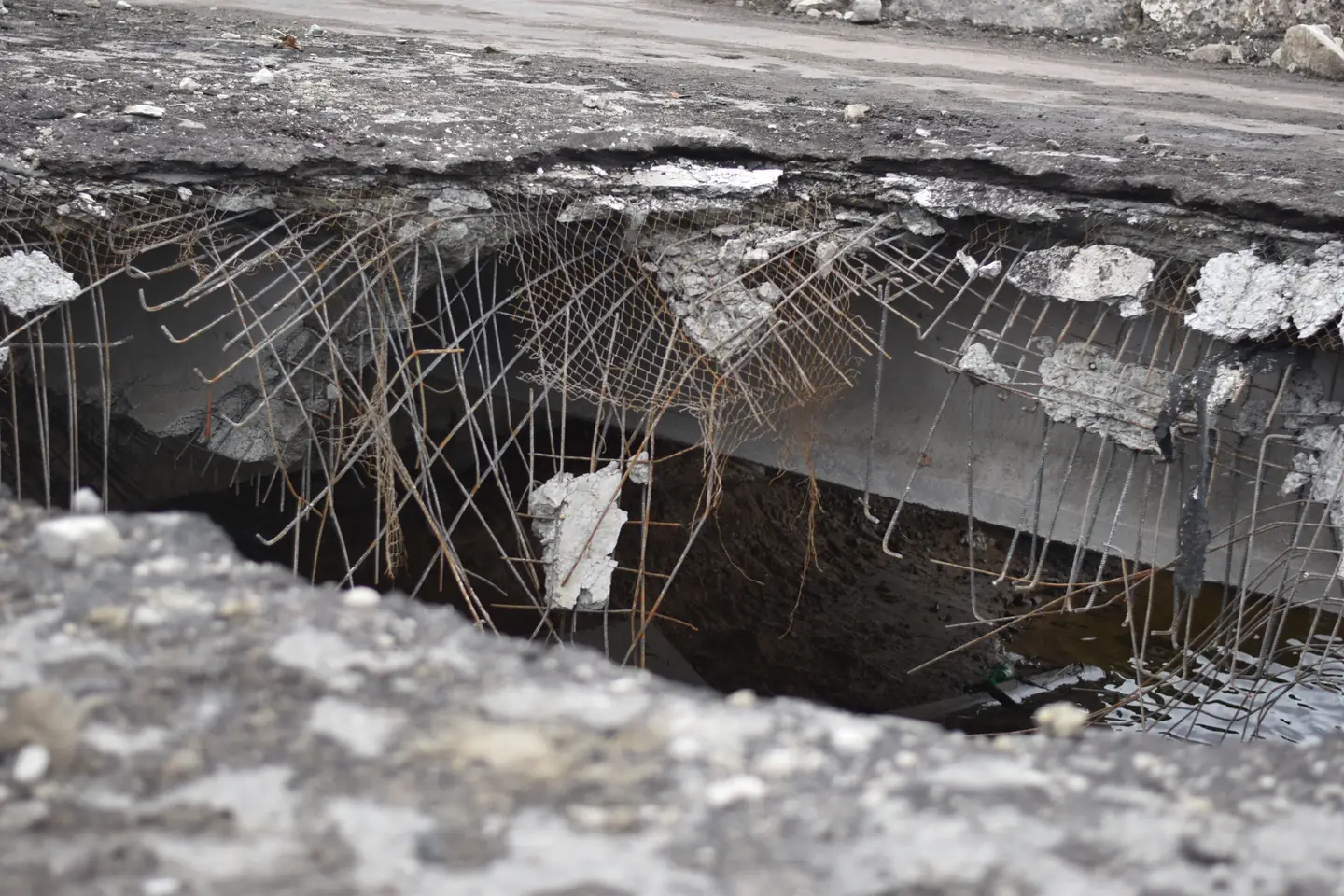
Gunite and shotcrete pools are built by spraying concrete over a rebar framework, while poured-concrete pools use formed concrete walls. Both result in a thick, heavily reinforced shell that’s effectively bonded to the ground around it — very different from a vinyl liner over a wall frame or a one-piece fiberglass shell.
Removing one means fracturing that shell with hydraulic hammers or breakers, cutting the rebar free section by section, and hauling away substantially more debris than a comparably sized vinyl or fiberglass pool. That extra labor and disposal volume is the main reason concrete/gunite removal tends to sit at the higher end of cost ranges in our cost guide.
If the pool or attached equipment area contains an unknown older finish, coating, mastic, or cementitious material, review the guide to asbestos before pool demolition before hammering, cutting, or grinding begins. Age and appearance alone cannot confirm what a material contains.
Full removal or fill-in for concrete pools
Concrete and gunite shells can go either route — a full excavation and haul-off or a fill-in where the floor is perforated and the shell is left largely in place. Because the material is so much harder to break up, the labor difference between the two approaches is often smaller for concrete pools than for lighter shell types — see our fiberglass & vinyl-liner removal page for how that compares on a lighter shell. Removing surrounding decking or an equipment pad is scoped separately — see deck & surrounding-concrete demolition.
What to ask a contractor about a concrete removal
- What equipment they plan to bring in, and whether your yard access supports it
- How they handle rebar removal and concrete disposal
- Whether dust, noise, or vibration control matters for your property or neighbors
- Their estimated timeline given the shell’s thickness and your lot access
Frequently asked questions
Why is concrete/gunite removal more expensive than vinyl or fiberglass?
Gunite, shotcrete, and poured-concrete shells are thick, reinforced with rebar, and structurally bonded to the surrounding soil in a way vinyl liners and fiberglass shells aren’t. Breaking, cutting free the rebar, and hauling away that much material takes more time, heavier equipment, and more disposal capacity.
What equipment is used to break up a concrete pool?
Hydraulic hammers (mounted on excavators or skid steers) are the most common method for fracturing thick shells, sometimes supplemented by hand tools for tight spots. Equipment choice depends on your yard access and the pool’s size and shell thickness.
Can a gunite pool be a fill-in instead of a full removal?
Yes — gunite and concrete pools can be partially removed and filled in rather than fully excavated, though the floor and upper walls still need to be broken up enough to allow proper drainage and compaction. See our fill-in page for the general tradeoffs.
Where does the concrete debris go?
Reputable contractors haul concrete and rebar debris to an appropriate disposal or recycling facility. Ask your contractor how they handle disposal and whether it’s included in your quote.
Get a concrete/gunite removal estimate
Tell us about your pool’s shell material and your yard access — we’ll route your request to contractors equipped for heavier demolition.